
Insights & Resources > The Record Rise in Gold & Silver Prices: A Flight to Safety or a Market Overreaction?
21 January 2026
The Record Rise in Gold & Silver Prices: A Flight to Safety or a Market Overreaction?
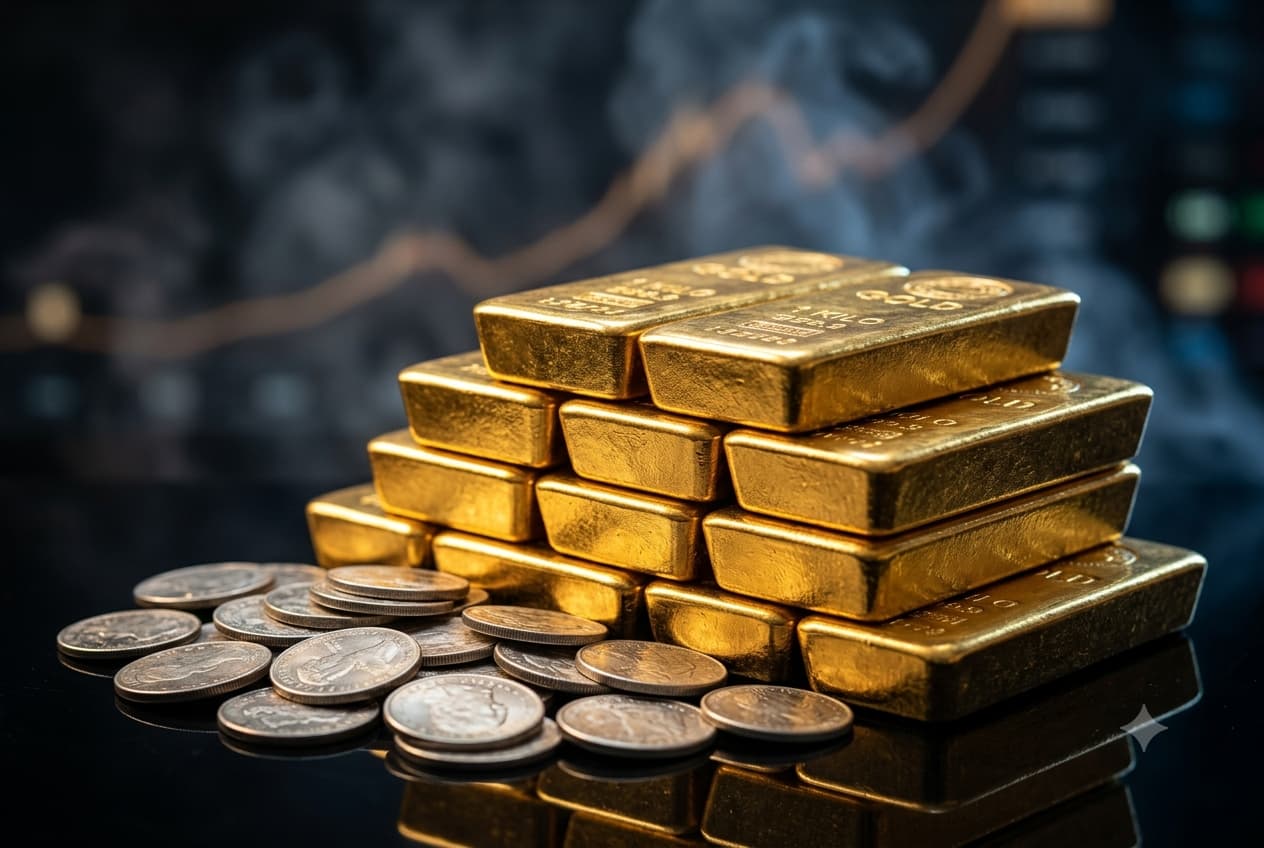
Gold and silver prices have reached levels that are difficult to ignore. Their recent surge reflects a world navigating persistent uncertainty — marked by inflation concerns, shifting interest-rate expectations, geopolitical tensions, and fragile confidence in financial systems. As investors reassess risk, precious metals have once again emerged as assets of last resort. Yet the scale and speed of the current price increase raise a critical question: is this a rational flight to safety, or are markets overshooting fundamentals?
For emerging economies such as Sri Lanka, this question carries added weight. Currency movements, import dependence, and household savings behaviour amplify global trends, making the implications of rising gold and silver prices particularly significant at both an individual and macroeconomic level.
What the Numbers Tell Us: Global and Sri Lankan Price Movements
Global Price Trends
Globally, gold prices have climbed to record peaks around USD 5,000+ per ounce in early 2026, up more than 70% year-on-year, driven by ongoing uncertainty in markets and geopolitical risks.
Silver has also soared, exceeding USD 100 per ounce, reflecting stronger investor demand and speculative interest, with gains outpacing gold in recent years. A broader look at 2025 shows silver’s price rising by nearly 150% over the year, marking one of the strongest performances in decades for both metals.
These figures highlight the magnitude of the rally — not just incremental gains, but structural shifts in investor behaviour that go well beyond short-term volatility.
Sri Lanka’s Local Price Dynamics
Domestic gold prices reflect both global movements and local currency effects, with the last few years marking an unprecedented re-pricing in the local market. Based on prevailing sovereign (pawn) price benchmarks, gold prices in Sri Lanka have increased by approximately over 100% in the past two years, effectively more than doubling within a relatively short period.
This sharp escalation has been driven by two reinforcing forces: sustained increases in global gold prices and depreciation-led exchange-rate effects that amplify international price movements when converted into Sri Lankan rupees.
Why Are Gold and Silver Surging?
1. Flight to Safety
Investors tend to buy gold and silver when confidence in stocks, bonds, or currencies weakens. Amid rising geopolitical tensions and inflation expectations, precious metals are increasingly viewed as insurance rather than speculative bets.
2. Declining Real Returns Elsewhere
Traditional instruments such as fixed deposits and bonds struggle to preserve purchasing power when inflation erodes real returns. In contrast, gold and silver hold intrinsic value that is not tied to any single currency or sovereign credit profile.
3. Exchange-Rate Amplification in Emerging Markets
For Sri Lanka, currency movement plays a critical role. A weaker rupee increases the local cost of imported gold and silver, reinforcing domestic price increases even when global prices stabilise.
Flight to Safety — Or Too Much of a Good Thing?
The dramatic rise in prices reflects strong structural drivers, but it also raises legitimate concerns. Demand from investors and central banks can push prices beyond historical norms when fear dominates fundamentals. Silver’s dual role — as both an investment asset and an industrial metal — can result in price overshooting during speculative phases, followed by volatility if economic conditions stabilise.
Final Thought
If global uncertainty continues to dominate markets, will gold and silver prove their worth as safe havens — or will today’s record highs represent an overreaction that eventually unwinds? That is the central question facing investors, policymakers, and savers alike.
For Sri Lanka, the answer may not lie in choosing between precious metals and conventional financial instruments, but in understanding how each performs across different phases of the economic cycle — and how confidence, currency stability, and inflation ultimately shape the true preservation of wealth.